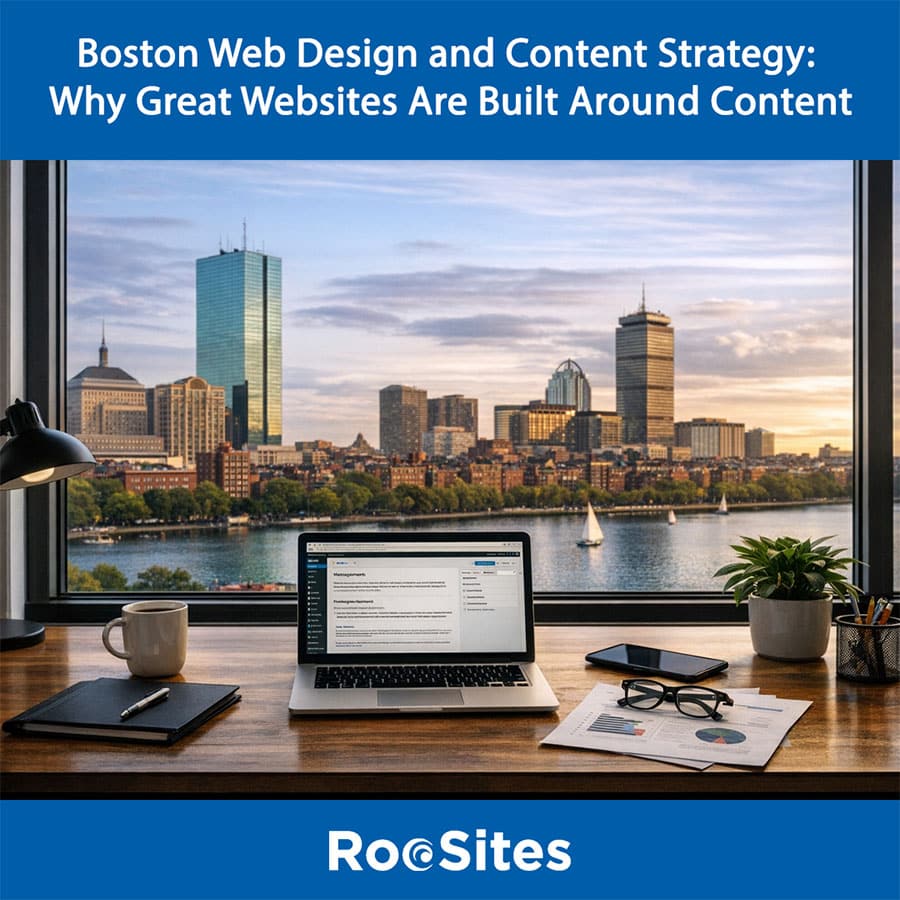
In today’s search-driven digital landscape, the websites that rank highest on Google are not simply the most attractive. They are the most informative, well-structured, and strategically organized. High-performing websites combine strong design with a clear content plan that targets the keywords and topics their audience is searching for.
For Boston businesses competing in industries like legal services, healthcare, finance, technology, and hospitality, content-driven web design is one of the most effective ways to stand out online.
Content strategy is the process of planning, organizing, and publishing information on your website in a way that supports both search engine optimization and user experience.
Instead of creating random pages or blog posts, a content strategy builds topical authority around the key subjects your business wants to rank for.
For example, a Boston web design company may create content around topics such as website performance, mobile-first design, local SEO, WordPress development, website security, and ongoing website management.
When these topics are connected through internal links and supporting articles, search engines begin to understand that the site is a trusted resource on the subject.
This approach is known as a content cluster, and it has become a powerful SEO strategy.
Google rewards websites that demonstrate depth of expertise, not just isolated keyword usage.
A well-built content cluster helps search engines understand the relationships between different topics on your site.
For example, a content cluster built around Boston web design may include supporting topics such as Boston web design trends, mobile-first Boston web design, Boston website management, Boston web design FAQs, and Boston web design case studies.
Together, these articles form a network of related content that reinforces your authority on the topic.
This structure improves keyword relevance, internal linking strength, crawlability, time spent on site, and overall SEO performance.
Another major advantage of content-focused web design is improved user experience.
Visitors arrive at your website with questions. The more helpful information you provide, the more likely they are to trust your business.
Strong content helps answer questions such as how much a website redesign costs, what platform a business should use, how long web development takes, and what ongoing maintenance is required.
By addressing these questions directly on your website, you create a resource that guides potential clients through their decision-making process.
When visitors stay longer, read multiple pages, and interact with your content, search engines interpret this behavior as a positive signal.
Boston is one of the most competitive business environments in the United States.
The city is home to biotechnology, finance, education, healthcare, legal services, and a thriving technology sector. With so many companies competing online, businesses must go beyond basic website design to gain visibility.
A strong combination of web design, SEO, and strategic content helps companies appear more frequently in search results and attract qualified local visitors.
Internal linking is one of the most overlooked components of SEO.
When related articles link to one another, search engines can better understand the structure of your website and the importance of certain topics.
For example, a Boston web design article about mobile optimization might link to pages covering website speed optimization, WordPress website management, local SEO strategies, and conversion-focused design.
This interconnected structure allows search engines to crawl the website more effectively and helps users discover related information.
Another key aspect of content-driven web design is continuous improvement.
Websites should not be static. The most successful sites are regularly updated with new blog posts, improved service pages, industry insights, case studies, and SEO enhancements.
Regular updates signal to search engines that the website is active and relevant. They also allow businesses to respond to new technologies, algorithm changes, and evolving customer expectations.
The most effective websites are not just visually appealing. They are strategic digital platforms designed to attract traffic, educate visitors, and convert leads.
Modern Boston web design combines responsive design, fast page speed, search engine optimization, clear messaging, structured content, and ongoing website management.
When these elements work together, the result is a website that not only looks great but also generates measurable business results.
At RooSites Web Development, we believe that great websites are built on more than just design. They are built on strategy.
We help Boston businesses grow their online presence through professional website design, WordPress development, SEO-focused content strategy, ongoing website management, and performance optimization.
Our goal is simple: build websites that rank well, load fast, and convert visitors into customers.
If your current website is not generating the results you expected, it may be time to rethink your strategy.
At RooSites, we build websites designed for long-term growth, search visibility, and measurable results.
Contact RooSites today to learn how our Boston web design services can help your business thrive online.
 Your website is your digital storefront, your first impression, and often the deciding factor for potential customers. To make it a success, you need more than just a pretty design—you need functionality, engagement, and optimization. Here are the 10 things every website must have to thrive in today’s competitive digital landscape:
More than half of all web traffic comes from mobile devices. If your site isn’t mobile-friendly, you’re turning away potential visitors. Ensure responsive design so your website looks and functions great on any device.
Patience is thin online. Websites that take more than 3 seconds to load lose about 40% of visitors. Optimize images, leverage caching, and use a fast web host.
What do you want visitors to do? Buy? Contact you? Subscribe? Make your CTAs clear, prominent, and action-oriented to guide users through their journey.
A confusing website is a bounce waiting to happen. Implement intuitive menus, breadcrumbs, and internal links to make finding information effortless.
Content is king. Regularly update your website with engaging blogs, product descriptions, FAQs, and more. High-quality content builds trust and helps with SEO.
Your site needs to be visible. Research and incorporate relevant keywords, optimize meta descriptions, and ensure your site is crawlable by search engines.
With cyber threats on the rise, an SSL certificate is non-negotiable. Visitors need to trust your site is safe for browsing and transactions.
Showcase customer reviews, testimonials, and case studies. People trust the opinions of others, so let them see the great experiences of your happy clients.
You can’t improve what you don’t measure. Tools like Google Analytics help you understand visitor behavior, track conversions, and optimize performance.
Even the best websites need upkeep. Regularly check for broken links, outdated plugins, and content updates to keep your site running smoothly.
If you need assistance implementing these 10 things every website must have, partner with a professional website management company like RooSites to ensure your site always delivers the best experience.
