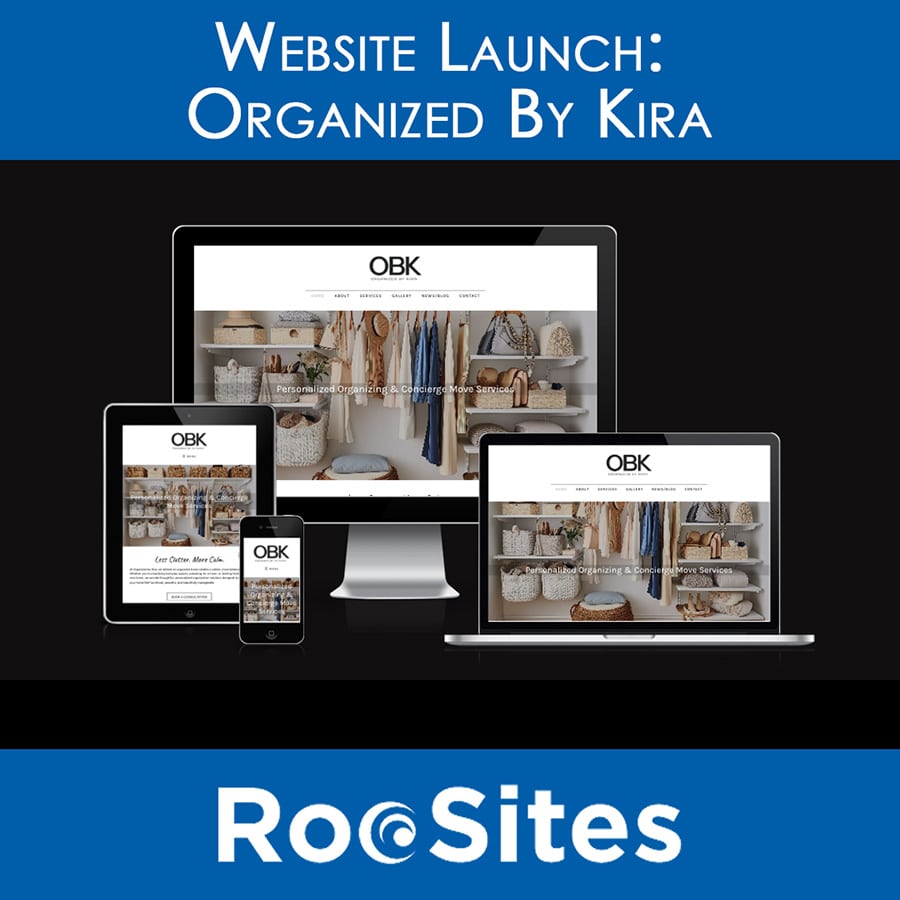
The new website, https://organizedbykira.com/, was designed and developed by RooSites and will be fully managed and hosted by our team. The project was created to showcase Organized By Kira’s professional organizing expertise while providing visitors with an easy-to-navigate experience to learn about services, request consultations, and discover how a more organized life can reduce stress and create peace of mind.
Organized By Kira helps clients throughout the Greater Boston area with home organization, decluttering, downsizing, move management, unpacking, and concierge relocation services. Their personalized approach helps clients simplify their homes and transitions while creating systems that are both functional and sustainable.
The new website features:
At RooSites, we believe that a website launch is only the beginning. In addition to designing and developing the site, we will continue to provide hosting, security monitoring, maintenance, updates, backups, and ongoing support to ensure the website remains fast, secure, and effective for years to come.
We are excited to partner with Organized By Kira and look forward to supporting their continued growth online.
Organized By Kira provides personalized organizing and concierge move management services designed to help individuals and families reduce clutter, simplify transitions, and create organized, functional living spaces throughout the Greater Boston area.
RooSites Web Development, LLC provides professional website design, development, hosting, and website management services for businesses, nonprofits, and organizations throughout Massachusetts, Florida, and across the United States. Our mission is simple: create websites that look great, perform well, and continue delivering value long after launch.
Contact Us Today For A Free Estimate!
In reality, a website launch is just the starting point.
A successful website is not something you build once and forget about. It is a living part of your business that requires ongoing attention, updates, improvements, and strategy. The companies that continue to invest in their websites after launch are often the ones that continue to grow online.
At RooSites Web Development, LLC, we often explain to clients that launching a website is similar to opening a new storefront. You don’t unlock the doors and then stop maintaining the building. Your website deserves the same level of care and attention.
The internet changes constantly. WordPress updates, plugin updates, hosting environments, browser changes, and security threats evolve every week.
Without proper maintenance, websites can become vulnerable to hackers, forms can stop working, plugins can conflict with each other, performance can decline, and search engine rankings can suffer.
Routine maintenance and monitoring help protect your investment and keep your website operating smoothly.
Google favors websites that remain active and continue providing value to users. Businesses that regularly publish blog posts, update service pages, add new photos, and refine content often perform better in search results.
A stagnant website can slowly lose visibility over time.
This is one reason why ongoing content creation and SEO strategy are so important. Even small updates can signal to search engines that your business is active and relevant.
Many businesses are surprised to learn that their website may look excellent on desktop computers while performing poorly on mobile devices.
Today, mobile performance is critical. Slow-loading pages, oversized images, unnecessary scripts, and outdated layouts can frustrate visitors and reduce conversions.
Website optimization should be an ongoing process, not a one-time task.
Businesses change over time. New services are added, staff members change, branding evolves, customer expectations shift, and technology advances.
Your website should grow alongside your business. An outdated website can unintentionally send the message that the company itself is outdated.
Keeping your website current helps maintain credibility and reinforces trust with potential customers.
One of the most valuable things that happens after launch is the collection of real user data.
By reviewing analytics, businesses can learn which pages attract the most traffic, where visitors are leaving the site, which services generate the most interest, what content performs best, and how users interact with the website.
This information allows websites to continually improve over time.
The most successful business websites are continuously refined, monitored, improved, and managed.
Launching the site is important, but long-term success comes from ongoing website management, content updates, search engine optimization, security monitoring, performance optimization, and user experience improvements.
A properly managed website becomes one of the most valuable marketing tools a business can have.
At RooSites, we don’t simply design websites and disappear after launch. Our website management services help businesses continuously improve and manage their online presence long after their website goes live.
From web design and development to website management, SEO, performance optimization, and ongoing support, we work with businesses throughout Massachusetts, Florida, and across the United States to help their websites perform at the highest level possible.
Because the truth is simple: the website launch is only the beginning. Contact Us today for assistance with website management.
